Tuesday, 22 September 2015

Are there any other ways to fund adult social care by reducing long-term illness?

There is another post below about funding adult social care from a private fund
There is another post below about what MPs from 3 parties said about ring-fencing social care
I think there should be a ring-fenced fund for health and social services, and a ring fenced fund for welfare benefits. National funds, debated in parliament, and sub-divided by region according to need. I think these notional funds should become more actual and clear over time, and be linked to something like all of VAT revenue plus more. I think that embassies, circuses, submarines and the like should not have a ring-fenced budged. I think that insurance-like services are what people pay tax for, and should be accounted-for in an insurance-like way.

This is a post about getting people to be more healthy - live fast die young as Blondie put it - rather than being depressed or demented or diabetic or dotty or desparados in some way that's less fun.

One part of this has already been done. It is to label parts of NHS budgets as "health promotion" and re-allocate them to councils, who at best use them for adult social care and at worst use them for a new Town Hall. I doubt any council is skilled in promoting health - councils have trouble being good at any one thing because they do so many different things with so many people involved. Their accounts don't track the effects of more or less spending either - they don't link spending in one area with saving in another.
But there are instances of better cycle lanes of maybe free swimming passes or more hedges in the centres of dual carriageways that might make a difference.

I think that central government, with laws and ministries, and perhaps the EU, can make a big difference.

Label the health data of mass-produced food in as large a typeface as fits. 

This would inform people about the food they're eating, and the advice they get on telly or from GPs. At the moment there is a system where smokers face rather disgusting images on their fag packets, which I think is over-kill, while eaters of saturated fats can be blithely unaware because the food labelling is too small to read. I don't think this is too paternal; I think it's just giving information in more readable way. I don't think this is impossible. If it can't be done by regulation, it could be done by charging higher VAT on badly labelled mass-produced food. As for food made in smaller batches, the same principal applies but the job that grocers have to do is different. They may not have a packet for a particular type of food. Obtaining the information to print might be a more significant part of the price of the food. I think the GLA has plans for nutrition labelling on restaurant signs, and nobody has said it's impossible.

Tax fags & booze by unit of tar or alcohol, rather than by litre or pack. 

I don't know if this is possible but there have been efforts with alcohol to enforce minimum prices or such like; this is a similar idea. The current tax system has led to a progressive strengthening of beer strength over the centuries. People who don't like fags argue that the cancerous compounds are too complicated to measure and tax, I expect, but a BBC book from years ago called "Can you avoid cancer?" suggested that tar was a major indicator of how dangerous a fag is. Since then, a generation has talked about secondary effects, and "sending out messages" and generally acted like school prefects, but I still believe what I read in a BBC book decades ago.

Print nutritional data on till receipts

Here's an idea for a pilot scheme that one of the supermarkets might try if given a subsidy to try it. Build nutritional data into the same stock database that tracks price and availability for the till receipt. The big supermarkets have already tried adding special offers and nectar points; I don't think this is much more complicated. As a result, there could be more shops printing out nutritional data at the bottom of the till receipt as well as the total price and the special offer on petrol. There could also be a tax or regulation to discourage advertising of fatty foods that are often eaten as part of an unbalanced diet. And a tax on meat - one of those categories of food - to justify high spending that exists at the food standards standards agency to regulate meat sales. I should have slipped that one in un-noticed in the middle of a paragraph, because some of the few people who read this will think "extra tax for meat: never!", but I hope those people read the other paragraphs as well, in case they agree with the rest.

Wednesday, 12 August 2015

The Mone Review: Barriers to startup businesses in areas of high unemployment:

Barriers to startup businesses in areas of high unemployment: The Mone Review


A more up-to-date version of this is on http://pantstopoverty.org.uk/jobs.html
A London report on startup businesses in areas of higher employment and so higher housing costs:
https://www.london.gov.uk/sites/default/files/helping_smes_to_thrivefinal.pdf


Dear Michelle Mone
I have some ideas to reduce barriers to self-employment and startups for people in areas of high unemployment, maybe on low incomes.

(1) Open air markets attract new recruits to trading.

Anyone walking past wonders "could I do that?".
So a duty on councils to provide for markets would be good. They could add a rule that X% of stallholders will be recently unemployed if they want. They or some government body can research locally-produced goods that might be available; adult education classes or mentorship schemes might help potential stallholders find stock in other ways.

There's a long footnote about this below because it's a slightly awkward point.*

Stallholders need cover, tables, and storage.  [added - some people think third party insurance as well. I don't know why]. Things that a central government grant with strings attached could provide. They also have rivals running supermarkets that have so much buying power that they can promise to pay for goods after selling them, if they sell, and at a reduce price if they choose to do a discount. I don't know what to do about that problem so I will pretend that it does not exist; there is still room for more stallholders.

One final point about councils. They have a care crisis. They do not have money. They may want to spend money on flashy things that people notice like markets and wifi in libraries, but devolved budgets cannot handle it; the budgets need to be from specific central grants out of Edinburgh or London.

(2) Internet and access.

Essential for business research, web sales, and finding-out the next thing to do in life.
The requirements for unemployed people include free wifi, hardware, and software which can each be a barrier to access for someone on a low income who is just experimenting and not yet convinced of benefits.

(a) Free Wifi and Voip.

A book on Drupal web sites** states "I’d like to also thank the good people of Oberlin, Ohio ... this book ... was written almost entirely at the facilities of Oberlin College and the Oberlin Public Library, with occasional stints in several of the town’s restaurants, bars, cafes, and lobbies, and in the Wi-Fi–enabled town square. I couldn’t have chosen a better place.". If every public library and council estate had free wifi, there would be a great benefit with next to no admin costs. Taxpayers would only pay for the signal. Perhaps, over time, some method like BT shared internet could be developed for people to share internet connections without sharing card data and bank details and things of that kind; a router that allows free access to your signal to neighbours and passers-by without security risks would be a good thing to develop. I don't know how to do it nor, to be honest, know how to use Voip either but other people might.

(b) Free hardware.

It is already cheap on ebay. Large organisations sometimes have piles of it to give away and individuals use Trashnothing or Streetbank to give it away. What's needed is a way that jobcentres and schools could publicise existing ways for people on low incomes to get hold of this hardware, ideally alongside everyone else but if necessary with some kind of rationing. Would there be enough hardware? Is there a way to get more available? My next points cover this.

(c) Free software.

Government is terrible at using open source or free software. The Cabinet Office could take a lead; any department could take a lead, starting with Libre Office instead of Word. It's hard to prove the obvious: that zero licence fees would save money. It's easier to prove that software with free licences would make used hardware more accessible to people on low incomes, and increase participation in the economy. If more organisations used free-to-download software, then there would be a demand for more adult education classes using that particular type of software, and people on those classes, such as an office skills class for unemployed people, would have more chance of picking-up software to use at home. Lastly, people who want to give away a pile of old computers would have more chance of wiping data off the disks and still providing a computer that people want as a gift. They could give away computers with a free non-microsoft operating system and standard open source software to run on it.

For that reason, I think the Cabinet Office or the Department for Work and Pensions should start using Libre Office and move-on to some of the other open source alternatives on Osalt.com. I think that government grants to councils and third sector organisations should be sent with a clause that says "if you use proprietary software we deduct £100", just as there are clauses that say things like "you must use an accountant" and "you must have an equal opportunities policy".

(d) Cheap phones and phone calls

The cost of phones is obviously  a barrier to entry into parts of life, including business, for people on low incomes.

My phone cost a few pounds second-hand. It runs on one of the pay as you go services you can see on http://petef.22web.org/payg.html https://payg-petef.rhcloud.com. So why do other people pay £30 a month in rental and insurance and confusion-marketing of free minutes mixed-in as well? I think that this is a market failure, and that government can reduce confusion by taxing the sale of locked mobile phones, and of monthly mobile subscriptions. As a result, confusion-marketing of mobile phone services will reduce, users of phones will get a clearer deal, and there will be less waste of old phones left unused because locked to one of the networks.

A side effect of this is to reduce waste of minerals used in making phones. Not much, but a little. I heard somewhere that the political system of Congo can't cope with demand for the minerals; demand leads to protection rackets and gangs and wars, so there's no great loss to Congo from having slightly fewer mineral sales and possibly a benefit.

(Getting back to the UK - This is a similar idea to the idea that fuel companies have fewer tariffs and always quote the cheapest - something that government is doing already).

(3) Workshop space****.

When I saw a lot of padlocked and abandoned factories on a tour of the olympics site, the tour guide suggested that they were un-lettable. I rang some of the numbers on the landlords' signs. They could barely bring themselves to answer the phone, let-alone pay-in a cheque, for under £1,000 a month. When you hear that businesses have trouble starting because of lack of money, that £1,000 a month could be one of the reasons they need it, and if the market in workshop space worked better then the space would be let and the rent would be cheap. I'd like to invent a scheme - not very clear in my mind at the moment - by which landlords of empty workshops were forced to let them at the market rate, even if that rate is zero, or allow a public body to take the space over and do it for them.

(4) Capital goods.

One of the reasons that middle-class Londoners like myself work in services rather than manufacturing is the cost of capital goods, or at least of transporting them, fixing them and finding somewhere to store them even if they're for sale in an auction. It puts me off buying the Tullis Russell paper mill or a shipyard or a washing machine factory. [added 15 August after emailing: I subscribe to posts about industrial auctions. A washing machine production-line came-up for sale in Wales a year or two ago.] Deprived areas are often areas where businesses like this have thrived in the past but barriers to entry are thought too high to re-start any part of them. [Places like Richmond on Thames where I live also have bits of manufacturing - there are two shipyards in this area, surviving amongst trades which need less machines.]  Meanwhile, I notice a lack of access to machine time by the hour or by the day and hope somehow that this market can grow. Makerspaces crop-up now and then; you can google them. I'd like a scheme by which existing companies that have specialised machines can make them available to colleges at the weekend. I don't know how practical this is, or what industries it helps, but I hope someone has an idea to help people get into business as Fife papermakers or Northampton shoemakers or Birmingham motorcycle-makers more than before.***

(5) Accountancy and book-keeping skills.

After watching the news about Kids Company I notice two things.
Not enough trustees willing to keep three months' reserve and make money out of it by investing in P2P lending at 12%
Too many applicants said to want the services of Kids Company by its director.
What to do?
I suggest that public services reveal more lines of their bank statements to the internet, using the waveapps service and some sofware work-arounds, so that they become transparent financially. This benefits well-run organisations. It reveals faults with firms like Kids Company. It attracts more people who think they could do better as trustees or book keepers or accountants.

I hope some of these ideas can help start-ups get established in areas where unemployment is high.

regards

John Robertson trading as Veganline.com for vegan shoes online
2 Avenue Gardens
LONDON
SW14 8BP

0208 286 9947

Free business bank accounts

Afterthought 16.07.2016 not sent
http://veg-buildlog.blogspot.com/2015/07/setting-up-shop-with-uk-business-bank.html has more about choosing UK business bank accounts
There is only one free business bank account available - an ICCI account with a long application form and online notes of people being turned-down.

Most personal accounts make enough money from sales and use of the customers' money to pay for the basic account service without fees. So why not the same for business? Typical standing charges are £3-£5 a month with Allied Irish cheapest at £8.50 a quarter, or £2.83 a month. The banks also charge for services that are probably nearly free to provide, like standing orders or bank tranfers in or out.

There isn't anything offered in return like a free two hour's accountancy and telephone advice, which would be easy for a bank to arrange because they've got the lines of data on their computer already.

Ideas.
(1) If anyone reading this knows how to set-up a basic bank account for business, please do it. For the rest of us, we have to hope that the market works well enough and that somebody will do it eventually.
(2) If anyone reading this wants to spend time writing screen-scraping software and updating online tables of bank accounts, please do it. Money Advice Service could help British Bankers' Association do a better account comparison service than they currently do with Moneyfacts, so that the rare free business bank accounts are easier to find. It would be more upt-to-date, include new banks that aren't in the association, and be searchable by price. The deal could be that Money Advice Service offers a link in return for British Bankers Association including non-members in their list, allowing it to be sorted by price, and keeping it up to date.
(3) Monopoly laws to prevent a bank from discriminating against business customers by preventing them from opening "trading as" accounts or changing the name of an account to the name of a company. At the moment, people like me have private accounts used for business, but there is always a risk of the thing being closed-down and a request for a business name would trigger closure.
(4) Government or someone to sponsor a basic business bank account and provide the software that other people could bolt other services on to. Given governments' record on IT, I guess this would best not be done by a ministry. Maybe if major banks were reguired to make their IT available to challenger banks at cost, or something like that, there could be a chance for free business bank accounts to become normal.

*Long footnote about selling UK-made goods to the UK market.
In the long term, I hope that the Department for Business releases more information about UK producers of goods in the hope that people in the UK discover how to buy them. This could make the market work more smoothly than at the moment - recently the Tullis Russell paper mill was closed for lack of interest by UK consumers. Surely, if people knew that a paper mill was paying UK taxes and sustaining a democratic welfare state like the UK, they would be attracted to its products just as they are attracted by good distribution and low price? The government produces no such list of UK manufacturers and information held at UK tax offices is not available to freedom of information requests under some special law or other. Government does produce guidance on buying paper, published by Wrap for Defra, but it is to promote recycled office paper and there is no mill in the UK producing recycled A4 copier paper so the scheme puts its own taxpayers out of work.
** Drupal 7 Visual Quickstart Guide by Tom Geller
***added  15.8.15 and not sent by email:
If you look for adult education courses near the closed Tullis Russell paper mill in Fife - postcode KY7 6PB - not much comes up on Hotcourses.com. People on low incomes might look for council-run classes in case there are discounts, and there is a list of 60 on fifedirect.org.uk . The list has a lot of leasure and community-building courses. The list has few job-creation and access to business startup courses, which is fine but there is no long to show where to find them if they ecist. The few work-related ones on fifedirect avoid use of expensive capital goods. There's nothing about paper-making. There's one about making pots, presumably by hand. There are one or two about photography and software with a sting in them: they want you to use Photoshop which is however-many pounds to buy, while most of the same skills could be tought in Gimp and Paint.net which are free and which employers like Fife Council could use if they wanted to. There are probably other courses known to job centres and schools which are more geared to work and startups but I don't know where to find them and doubt that the people of Fife know much better.

****
Since writing this I saw that there is a scheme for empty workshop space, but for doing it up and making it more expensive and suitable for those tax-dodging international companies that politicans like to court. Not a scheme to rent it out for next to nothing. This is the quote found in Businesszone.co.uk:

4. Property and Machinery Perks
If your business goal is to transform a derelict building that’s been vacant for at least a year into a new project, then you’re sure to be entitled to financial help at this stage.
The business premises renovation allowance offers SMEs a full 100% allowance on buildings that require work and renovation, in order to be fit for business purposes. Please note that qualifying properties must be in a disadvantaged area and that this break is only open until 2017.
Capital allowances are also available for SMEs that frequently use machinery on a daily basis. You can check for a list of eligible items directly on the HMRC website. There’s also the Enhanced Capital Allowance (ECA) scheme which provides SMEs with enhanced tax relief when choosing to invest in energy saving equipment. You can find further details on this topic here.


other posts from this blog on one page
.

Planb4fashion blog posts are by Veganline.com which is a vegan shoe shop

Tuesday, 4 August 2015

"Assuming the factory has to close..."


One Richmond MP began a leaflet a bit like this a few years ago:

"Assuming the Stag Brewery has to close, what are your views?"

This is pretty typical of MPs who don't like industry and don't want to think about it, even if
  • there is a "don't buy british" policy at some public sector organistaions
  • the bank of england sets interest rates to effect exchange rates, or 
  • their parliament passes contract laws, employment laws and trades union laws
  • the department for business is meant to do something about market failures
By fluke, the brewery remained open although the owners Inbev have been known to pay their suppliers after rediculously long delays, using unfair market power to insist on contract terms. This threatens suppliers, but at least the brewery remains open. Looking at it, it's hard to imagine another one springing-up any time soon if this one is bulldozed.

Last month Tullis Russell paper mill went bust after late payment by a major wholesaler that had also gone bust, and an exchange rate rise in a period when the Monetary Policy Committee states that interest rates might rise some time and hike it up even more. You would think that a big worker co-operative near the former prime minister's constituency would be consulted by government about how government buys paper, but no. There is no list of UK paper producers available from government, and a specific law prevents freedom of information requests to HMRC to find-out if it knows any taxpayers who write "paper maker" on their tax return. There is no attempt by UK government to put UK taxpayers in touch with one another for buyer and selling, such as public sector procurement rules that make sure UK firms are given a fair deal, or free data for writing trade directories of UK producers.

Tullis Russell photo from co-operative news
Procuring Office Paper and Publications: Guidance

...is a 52 page document from WRAP, which is funded by DEFRA, the department for the environment farming and rural affairs. It quotes examples of organisations like Croyden Council that have recycled preferences in their paper-buying policies, and Wrap urges public organisations to do the same.

Unfortunately there is no recycled office paper producer in the UK. The nearest is Austra. So all this paper has to be moved from there to here at environmental cost.

Meanwhile the remaining UK paper mill is barred from supplying whichever public sector organisations unless it invests in a new recycled product, which is expensive in a country with rigged exchange rates and high labour costs, and not massively useful when so much paper is recycled to carboard and loo roll anyway. I say "Is barred", but production has quite likely stopped, and I don't see how anyone would want to run the mill until this bar is removed. Are any MPs making a fuss? No. They think it's perfectly all-right to have a "don't buy british" policy in large numbers of government departments. As a final insult, MPs (including Susan Kramer when an MP) have not voted to make trades unions as accountable as other financial mutuals. Redundant employees are meeting their union for advice, which will probably be about whether assets can be bought back, what happens to the pension, and whether any job training is available. Unions' track records with other redundant work forces like Richards of Aberdeen has been abysmal, which is in a small and indirect way the fault of MPs.

Anyway, this is a picture of Tullis Russell paper mill. If you think it's not important what happens to private sector companies, it follows that you think something can grow-up to replace it. If you think it is important what happens to the mill, then somebody should make a fuss about that stupid campaign by Wrap and all the organisations like Croyden Council that it has influenced. Given a fuss, the thing might be workable and ex-employees' groups might even be among the bidders to buy it. Assets for sale include customer lits, goodwill in more than 70 corporate and product brands, 200 registered trademarks, customer information and 80 domain names as well as a frighteningly large collection of machines and ex-employee names. Anyone who could make UK production an eye-catcher for shortlisting and a cheap deal when selling to UK public sector organisations could do well.

I've just added another post with suggestions for the new Mone Review into how startup businesses do or don't startup in areas like Fife.

It's a two horse race.
Only protest candidates can make a difference here

IT for social care.

This is an idea. People who are good at IT volunteer to write accountability web sites to show how councils spend money. Councils nowadays have to publish each payment over £500 or so, and they do. On their web sites. Did you know? No. So there's a need to find nifty ways to present this data for free to anyone who wants to see it, on free web servers, using free developers as I think these people are called.

This is the reward: developers put ads next to the data from qadabra or buysellads or google, and the money earned goes into a trust fund for whatever these developers think is nice. It would probably only earn £20 or so and need a lot of compound interest in P2P lending sites before worth more.

I come in to this thinking of a top-up percentage towards the social care budget of a council. Mine is Richmond on Thames and their web link is at the end of this list.
http://richmond.gov.uk/council
http://www.richmond.gov.uk/home/council/open_richmond.htm
http://www.richmond.gov.uk/home/council/open_richmond/information_about_the_council.htm
http://www.richmond.gov.uk/home/council/open_richmond/information_about_the_council/council_payments_to_suppliers.htm

Monday, 27 July 2015

http://www.independent.co.uk/news/uk/politics/watch-the-undercover-footage-that-allegedly-shows-labour-peer-lord-sewel-snorting-cocaine-with-two-prostitutes-10417927.html

http://www.independent.co.uk/news/uk/politics/watch-the-undercover-footage-that-allegedly-shows-labour-peer-lord-sewel-snorting-cocaine-with-two-prostitutes-10417927.html

I can't work out what Lord Sewel is meant to have done, other than set-up an incompetant slow-moving and make-work system for sacking peers, which I think should get him sacked as chair of whatever committee.

Other peers think he should stop being a peer after snorting cocaine in front of journalist prostitutes who were doing a sting operation with a concealed camera. They voted for byzantine incompetance. Not the journalist sting prostitutes but the lords. The lords don't mind pomp and incompetance and £300 daily dole for which they do "F-all"; they mind it being mentioned in The Sun. They give interviews suggesting that Sewel resign from being a peer. Why? All he has done is taken a substance made illegal for protection of un-wary users, and said on tape that most peers too "F-all" for £300 turning-up fee. He has also sold extra copies of The Sun because video of a late middle-aged man trying to be naughty is always strange, and all of us can imagine ourselves in his position.


I can't work-out the point of social changes in the last 50 years, if people are still silly about the same things they were silly about during the Profumo Affair. Haven't peers and politicians been reading books, talking to ordinary people, watching telly or generally picking-up good libertarian ideas since the early 1960s era of politicians' sex scandles? No, apparently. Have they been passing laws to make as much as possible legal, so that there is no shame in being caught on video doing whatever it is? Well, Sewel was a Blair choice for peerage, so maybe not in his case. Also, cocaine is an imported product while speed is often made in the UK, so Lord Sewel could have supported UK manufacturing more.

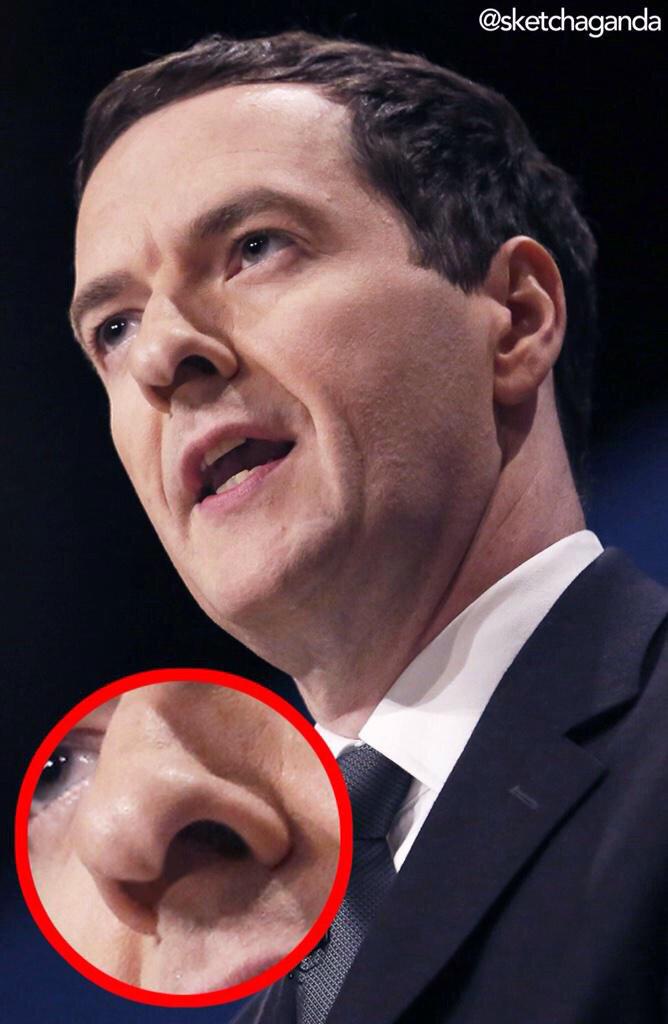
Now he's gone, I can't work out why the chancellor shouldn't go, after being photographed with part of his nose missing as though a heavy user of cocaine, and after similar Sun Newspaper allegations sourced from a prostitute.* The difference is that The Sun did contrive to get a couple of prostitute journalists to go-in with a video camera; the chancellor declined their offer. He had a more discrete source. So the unwritten constitution is:
  • taking cocaine with prostitutes does not get you sacked, if you do it in private and in your own time.
  • letting the servants find out about it is close to the edge
  • doing it on video does get you sacked with voices of condemnation all-round, for failing to get your prostutes from a reputable pimp. This could by why MPs have made speeches about those flyers in phone boxes for Miss Whiplash that cheer-up tourists. They may boost tourism but they undermine the work of official pimps.
  • the job is not much related to the offence. 
    Drivers face massively stiffer penalties for drinking than pedestrians, who face none at all if they can avoid falling-on to somone or vomiting-over someone. You would think that the person who judges what level of public spending is achievable, and the social contract between taxpayers and the same people as benefits claimants over time, would need sober judgement. Maybe do something odd some weekends, but have a lot of quiet time for sober reflection. Or not. Someone who just has to be patient and make a bunch of committees work politely in the Lords needs a lower level of sobriety because the work is more robotic.
What if
  • Someone who has had cocaine on video wishes to stand for parliament?
  • Or been a porn star?
I'm confused.


*
I don't know whether a tabloid newspapre retouched the photo to exaggerate. I do know that another MP has raised the question of the chancellor's cocaine use in the commons. I also know that the chancellor talks like someone who needs a holiday - the promises not matched to reality; the stylised phrases, but a lot of ministers have always been like that over the years.


Monday, 4 May 2015

Candidates interviewed by local paper

Two points about candidates two and three.

They have been interviewed in a local paper here
Candidate 2 has a touch of the "local people" speel that lost the last liberal candidate her seat.
http://www.richmondandtwickenhamtimes.co.uk/generalelection2015/12926837.General_Election_2015_candidate_profile__Liberal_Democrats/

Candidate 3 says that voting for numbers one or two doesn't work, but without evidence.
http://www.richmondandtwickenhamtimes.co.uk/generalelection2015/12926793.General_Election_2015_candidate_profile__Labour/

Oh here is a thing that should go on a page somewhere - I don't know which one
http://www.richmond.gov.uk/general_election_2015.htm It's odd because I'd expect general election stuff to be on the electoral commission web site but it's ended up on the council one.


other posts on one page | the author John Robertson sells vegan shoes online at Veganline.com 

Saturday, 2 May 2015

Constituency and Ward map for Richmond on Thames or Richmond Park Constituency

https://www.gov.uk/government/uploads/system/uploads/attachment_data/file/250941/7032_iii.pdf#69

Map of Richmond upon Thames council area, which overlaps a lot with Richmond Park Constituency. I'm not quite sure which is which, but a ward is a convenient maximum area to leaflet whether for an MP or councillor. I don't know how many days' work it is to leaflet all those letterboxes, but not many people would want to do more.

The page is labelled page 63 (add six to get the real page 69) headed "Kingston upon Thames and Richmond upon Thames, existing constituencies".

Wards have about 6,500 voters each - there is an  estimate on the table for each one.

There are ward maps printed rather fuzzy and sideways but I think they can be made-out. I am in East Sheen Ward. I had trouble printing this first time.

Googling "open streetmap" and "constituencies" got me to
http://boundaries.spatialanalysis.co.uk/ which is also slow to load but looks promising.


http://boundaryassistant.org/elections/local/localelections2014.htm?t=lb&y=2002;2006;2010;2014&b=1 is much quicker to load and matches an outline map - with no streets - to poll results last time. Apparently the winning party candidates got over 2,000 votes and runners-up get 750 so it would take a very good leaflet to change enough peoples' minds. The candidate who was interested in social care but stood down got more votes than the unknown name who replaced her.


other posts on one page | the author John Robertson sells vegan shoes online at Veganline.com 

Thursday, 30 April 2015

http://www.theguardian.com/business/ng-interactive/2015/apr/29/the-austerity-delusion

http://www.theguardian.com/business/ng-interactive/2015/apr/29/the-austerity-delusion

Countries which have made massive cuts to public spending have become poorer as a result.

Comparisons to Greece don't make sense.


other posts on one page | the author John Robertson sells studied economics at Keele Univesity 

Swap My Vote - why not just vote for one of the top two parties here?


Someone at 38 degrees thinks the vote is sewn-up in Richmond Park.
Last time, the unelected candidates' votes were similar to the elected candidate's votes, so I don't think it was sewn-up last time - just too short of stubborn voters who ignore the local numbers.
http://www.electionforecast.co.uk/tables/predicted_vote_by_seat.html is the table used for predictions, but is suggests a lot of people voting for their no-hope choice which didn't happen last time.


Dear Fido

Next Thursday, would you rather be voting in an area where the race is tight?

In places like Richmond Park where you live, your vote might not change the result. It seems like it’s already sewn up. [1] But what if you could move your vote to a battleground constituency, like Brighton Kemptown, where the race could come down to a few votes?

Here’s the idea. You swap your vote with another 38 Degrees member in a tight-race constituency. They’d prefer to choose one of the smaller parties, but they’re willing to vote for a front-runner to help swing the result - as long as someone somewhere else (you?) votes for their smaller party. That way, when the national picture’s totted up, their favoured smaller party will still have the same share of national votes.

Basically: they’ll vote for the party you want to win, in a seat where that vote has huge impact. And in return, you’ll vote for their choice of smaller parties.

Are you in? Click here to say you might be interested:
https://secure.38degrees.org.uk/swap-my-vote


Here’s how it works:
  1. You fill out a quick form to say which party you’d like to help win in a tight-race constituency. You also say which parties you’d be prepared to vote for in exchange.
  2. The website will search through forms from 38 Degrees members in places where the race is tighter, until it finds a match.
  3. You’ll be put in touch with them to arrange the vote swap.
Why would someone living in a marginal constituency want to swap their vote? Even where the race is tight it’s usually only between two parties. Someone who supports another smaller party might find themselves in a tricky position. Voting for their favourite party could split the vote, and actually help the party that they really don’t want to win.

That’s where you come in. If you vote for their party then they vote ‘tactically’ for your party - knowing that their favourite party still gets a vote somewhere else in the country. Both of your votes have more impact as a result.

If you’re in, click here to express your interest, so the office team knows if it’s something lots of people will want to do:
https://secure.38degrees.org.uk/swap-my-vote


Why bother? Our democracy’s a bit shaky, really. Not everyone’s vote has an equal effect on who the next government is. 38 Degrees members have spent the last five years using new technology together to change the way the world works - so why not bring the same spirit to this election?


Thanks for being involved,

James, Susannah, Laura and the 38 Degrees team


NOTES
[1] As estimated by independent election experts: http://www.electionforecast.co.uk/

Tuesday, 28 April 2015

http://ukpollingreport.co.uk/2015guide/richmondpark/

http://ukpollingreport.co.uk/2015guide/richmondpark/ - This siggests a 50% / 43% split with 7% bizarrely choosing to vote for other parties. Maybe they're party members and want to stop the party loosing its deposit, but it seems a bit wierd to go to a polling booth and think: - "I will excercise my democratic right to vote for a party that won't get in, even if it means that the spit between the top two gets muddled-up".

But LBC publishes a bar chart of recent results and shows a very large swing to Conservative, either because of a previous candidate or because of unease with the tactical voting system. People have excercised their democratic right to vote for a party that won't get in, or abstain.

http://www.lbc.co.uk/live-election-results-108441/constituency/473/richmond_park

http://www.electoralcalculus.co.uk/cgi-bin/seatdetails.pl?seat=Richmond%20Park shows detailed best estimates of vote by ward

http://www.whoshallivotefor.com/constituencies/r/richmond-park
This one offers a questionnaire as well, followed by a suggestion of which party suits your answers

Tuesday, 31 March 2015

How to influence a party: offer to deliver factual leaflets only

One of the parties go in touch to ask whether I would deliver leaflets for them.
I said "only a manifesto or factual leaflets - not cheerleading stuff", or something like that.
The person on the phone said that there was a campaign opening leaflet coming soon but she hadn't seen it, so couldn't say it was factual, and would I like to be a teller? Well I might. It's quite jolly. But I said no.

This seems quite a good way to influence the parties where you live. Maybe I should show a bit of willing to the other parties but then draw back and say "only a manifesto or factual leaflets - not cheerleading stuff" and see if it influences them as well. Or maybe it would look a bit daft to pretend to support both rival parties. On second thoughts I won't, but anyone who reads this could have a go.
https://electionleaflets.org/constituencies/65598/richmond_park shows what leaflets are dumped on politically-minded people otherwise. They're quite embarassingly awful things that you wouldn't want to be seen delivering. I mean: if someone asked what party you were voting for would you really say "this party is putting your family first", copyng slogans from the USA? No. So why deliver that message if it's printed on pape with pictures of people smiling, slogans, and no references to where to check facts on the net?

I'm sure that local counsellors mention more money for policing on their leaflets when the council has nothing at all with funding for policing, and that nobody notices. Maybe they have a bet. "I dare you: I will if you will" "OK then - £10 to the first one who gets found-out".

http://www.quora.com/I-dont-think-UK-election-leaflets-are-informative-enough-Has-anyone-offered-to-post-only-factual-leaflets-or-manifestos-for-a-party-in-their-area-Has-anyone-had-a-good-response-from-a-party-Latest-leaflets-ElectionLeaflets-org-shows-whats-posted-now is question that will probably remain un-unswered: has anyone tried to deliver only the best leaflets from any of the parties?


Nobody from my preferred party has got back to me. I found a 57 page manifesto on their web site and someone helped me by email to find a plain text version, but couldn't point me to a short version that they call "easy read". Mencap have done better, producing easy-read manifestos for all the parties but they're not a name I'd usually associate with editing of political statements.

There is a local manifesto to download. It has no links in it to council budget pages or numbers, and covers about 4 pages when turned into text. Just possibly, this is the one to start on.

The next question is where to deliver. Anywhere local, but to know ward boundaries would be good to I could tell other people. Where do I find a street map of Richmond on Thames with ward boundaries?


Wednesday, 25 March 2015

Politician attempts to defend record on social care

Guardian: "David Cameron is heckled repeatedly on Tuesday while addressing an audience at an Age UK event on the state of the NHS. Members of the audience shout: 'Rubbish!' and: 'You're not answering the question!' as the prime minister takes questions about the NHS and healthcare for the elderly " https://www.gov.uk/government/speeches/pm-speech-at-age-uk - full text of opening speech I don't know of a full text or recording of the question and answer session. There are excepts on a youtube video titled "Daily Telegraph" and "ITN", but no reference on the ITN web site and no full text on the Age Concern web site that I can find. I've emailed Age Concern's PR person in case she knows of one, but doubt she'll have time to respond.

Five days later, no reply, so we don't know if any good points were made by audience members because there's no public record of them.

Saturday, 21 March 2015

https://fullfact.org BBC and C4 "Reality Check" links and http://www.askforevidence.org/

Fullfact say

What kind of thing do you check?

It will vary a lot. There are some subjects we often can’t say much about, such as foreign relations, claims about what might happen in the future, or ethical dilemmas where the facts aren’t really in question. On other topics, facts are at the heart of the argument and we’ll have more to do.


They seem to be a blog for expert fact-checkers and welcome volunteer applicants. The factual topics are mainly Westminster ones covered by media and ministries; there's nothing about social care on the health tab.

Crime

Economy

Education

Europe

Health

Immigration

Law 

http://www.bbc.co.uk/news/election-2015-32072999 BBC Reality checks on topics like how many staff the NHS needs, how easy it is to find £12bn of cuts

http://blogs.channel4.com/factcheck/ Channel 4's fact checking page

http://www.askforevidence.org/ is a new one. I guess candidates will ignore it at first until it catches-on and a few are caught-out, then they'll learn to answer emails from that address. You can use it to ask for evidence about claims on http://electionleaflets.org

Wednesday, 4 March 2015

Post to 38 degrees for Richmond Park Constituency

Social care.

Introducing myself:

I want to get something done about social care by disrupting the next Westminster election, if I can persuade other disrupters to agree!

I want a fixed national social care budget read-out alongside health and defence in parliament as part of the budget. It can be allocated to councils by need if they can be trusted to ring-fence it. It cannot be set by councils.

I realise that this is a popular idea but there are a lot of similar and overlapping points of view, so I just want to make a fuss in the next election somehow.

Making a fuss could involve someone standing for parliament and agreeing to stand-down if one of the top two other candidates agrees to rebel against their party whip and support the idea if elected.

That's me. That's why I logged-on and posted. I have a little-read blog on http://election-richmond-park.blogspot.co.uk/ and I have done a bit of questioning and googling to find out about how elections work but have probably forgotten it again - there's some deadline for agreeing to pay a deposit and get free postage for your electoral bit of paper to votors, and some deadline for taking your name off the ballot paper. The ideal outcome that could influence a mainstream candidate is to pay a deposit, get your bit of paper posted free to votors, and show that you have enough support that you could keep your deposit by not standing-down. Something like pledges of financial support.

I've written the odd thing on another blog about cheap ink paper and home printing, but whatever I write on blogs will only put readers off as I want to concentrate on a social care budget that's as national as any other budget read-out in the budget speech.

John R.

PS I'm not an easy person to convert towards other similar campaigns. Just thought it best to say before anyone tries!

Posted on http://election.38degrees.org.uk/areas/1086

Saturday, 31 January 2015

http://www.govyou.co.uk/author/employeesorguk/

A site http://govyou.co.uk has set-up.

http://www.govyou.co.uk/author/employeesorguk is an example of some of the ideas submitted.

I might add a bit of detail some time but you can see it from the links meanwhile. Some of the tags are about events of 5 years ago that no longer seem relevant now, like a state visit that had just happened at taxpayers' expense.


Wednesday, 7 January 2015

cost of leaflets

http://www.cheapleaflets.co.uk/budget-leaflets.php

Looking at who printed previous candidate election leaflets. I think I could get somewhere.
http://www.cheapleaflets.co.uk/budget-leaflets.php shows prices for an independent candidate's leaflets last time which go down to a penny times a hundred thousand, so £1,000.

A4 paper in supermarkets at the beginning of term goes down to half a penny per sheet, and you only have to pay for bottled ink to write your thoughts about the world on the paper with an inkjet, some adapting technology, and a bottle. Wilco go a shade cheaper.

A4 pallets of sheets on Alibaba are about the same price per sheet at most - sometimes much less but I don't understand the detail. Nor do I know which UK paper mills make A4 paper and what their minimum order is - or I didn't when first writing this and have discovered a depressing fact that the government has helped put the last UK supplier of A4 office paper - Tullis Russel - out of business by promoting implausible targets for recycled office paper.

-----------------------------------------

Nobody much reads this blog so I can put a rough link in here:
http://www.spectator.co.uk/2014/08/could-you-afford-to-become-an-mp/

The journalist - Isabel Hardman - tries to account for lost earnings spent sucking-up to the party machine by prospective MPs. Some eventually get selected for a winnable seat and go-on to be backbenchers or even cabinet members, where they can be sacked for being the wrong age or gender or for being too political in the wrong way. Others - apparently - spend money just trying to get noticed by a constituency association. The party machines value campaigning over thinking, which could explain the number of thick campaigners in parliament:

"Becoming an MP takes time, too. Parties understandably set tough targets for their candidates based on the number of days spent delivering leaflets, the visits to by-elections, articles in local papers and so on. Those who consistently fall short face the axe: I understand that the Tories have already sacked one candidate for missing campaigning targets, and Labour’s bigwigs say they won’t hesitate to do the same to anyone on their list."


It would be good to find a solution.
A party willing to back useful candidates over manic campaigners would be good.
An electorate patient with maverick outsiders would be good, if not for the sake of electing them but in order to let them influence elections by getting a fair number of votes.

Thursday, 25 December 2014

midwife shortage

Years ago a baby was born in Bethlehem to discover
  • no room in the place where people usually had babies,  and
  • no midwife. Dispite this lack, there was money available for
  • three kings to visit who were superstitious and offered completely irrelevant things.

Wednesday, 24 December 2014

Democracy, decency and devolution - speech by Tessa Jowell mayoral candidate for London

I don't agree with this speech but here is the full text. I've added some graffiti below it
and a related rant on another site that says you can feel sorry for MPs but assembly members are shit

Democracy, decency, and devolution
Inaugural lecture delivered by Dame Tessa Jowell MP on her appointment as Professor of Practice at the London School of Economics - Monday 8th December 2014

1.
It is my great pleasure to have become a Professor of Practice at LSE.
I hope that in this inaugural lecture I can apply my experience of 38 years as an elected representative to respect both my hosts – LSE Cities and the Department of Government.
I have fought 12 elections and may just have 1 or 2 left in me!

2. In this lecture, under the themes of democracy, decency and devolution, I want to talk about the rupture between the public and politics, and the chronic dissatisfaction with the actions of government, with the resultant sense of alienation; but also how there is one more important preposition to add to Abraham Lincoln’s exhortation of ‘government of the people, for the people, by the people’; and that is,
government with the people.


3. Trust in politics, politicians and the governing is at rock bottom;

and there is cynicism, suspicion about motive and a feeling that most politicians live in a world different from everybody else. It’s open season on politics and politicians. But in praise of representation, the sacred bond between the elected and those that they serve, I say this – that in 23 years as a Member of Parliament I have never walked through the Central Lobby or into the Chamber of the House of Commons without a sense of awe at the responsibility I hold for the 80, 000 people I represent.

4. It is not always easy,
I am there as their representative and not their delegate and it is a role and function at its best when a thread of engagement with individuals often with unimaginable problems, runs through and links their experience to the big decisions about legislation and policy. What are often derided as the ‘social work functions' of MPs are vital to ensuring the legislation is animated by the ambition, frustration, fortitude and ingenuity of lived lives.

5. There is also vagueness about exactly what a MPs job should be. The balance between
  • local activist,
  • caseworker,
  • legislator
  • campaigner
is undefined. Are MPs too young or too old? Are they less competent if they have not done what are generally regarded as “proper jobs” pre Parliament?

6. While trust in MPs generally remains low, it is trust in ‘Your MP’ that has fallen significantly and fuelled the campaign for recall. That is something we should worry about.

7. So much is focused on the pace of change and the lack of control that people feel over what is happening to them. The fear and insecurity that this creates. The sense that people are on their own. The fracture of the two-party predominance. The end of tribal party loyalty.

8. But in some ways national politics has become more representative over my 38 years. I am especially proud of the way that Labour has promoted women candidates and MPs, including by the once controversial means of all-women shortlists. When I became a Member of Parliament there were more MPs called John or Jonathan than all the women from parties put together. That has changed but changed is too slow and the ease with which Westminster seems disconnected and becomes disconnected from the burning day by day concerns of those we represent is one of the biggest contemporary challenges of our parliamentary democracy.

9. At the same time it is important not to overdramatise the position: in the 1970s election the turnout was 72%; in 2010 it was 65% - a decline, but not a collapse. The turnout in the recent Scottish referendum was 85%. More worrying is the decline in participation among younger voters - only 44% of 18-24s voted in 2010 - and declining support for the two larger parties, which in 1970 took 90% of the vote but only 65% in 2010. For my party, and the Conservatives, there is a massive challenge to continuing being parties of government while engaging and properly representing the mainstream majority.

10. Of course that sense of connection and relevance to people is important. Often it exists more in unspoken ways than it does in highly publicized intention. ‘Get on and do it’ and then tell people you’ve done it is so much better than heralding intention before anything has changed. Remember the Suffragettes: deeds, not words.

11. I am concerned that more people are entering Parliament without having worked in the world beyond politics. I had a professional career spanning 20 years and I have drawn so heavily on that experience in most of what I have done. The importance of relationships between users of public services and their providers, the small changes that can bring huge benefit to vulnerable people – and I’ll tell you that training and working as a psychiatric social worker there were daily reminders of that - the importance of routines in overseeing the delivery of policy. The speech is itself is not what bring about the change it promises. It is systematic and well planned execution of a plan is. And when I was leading the reorganisation of social care in Birmingham twenty five years ago I learnt most by staying overnight in each and every one of their many residential homes. Nothing experiences policy making better than experiencing in that slightly artificial way how policy making is delivered, and seeing first-hand how the instinctive humanity of residential care staff is sometimes outlawed by the rule book issued by the central department.

12. When I was first elected as a local councillor in 1971 the purpose of politics was to spend money and if you were on the left to spend more money than those on the right, the input invariably more important than what the spending achieved.

13. The amount of money spent was of itself evidence of success. But money was spent and indeed still is on the general presumption that once allocated it will always be needed. This is a pessimistic view about the potential for investment to secure change in people’s circumstances and opportunities, and produces consequent long term waste in securing resources for services which many no longer be as relevant as when they were first identified.

14. The other great failure on those years was what became ‘the producer domination of services’ which left a legacy, which we live with even now, of services organised more for the convenience of those who deliver them than the convenience of those who use them. This is particularly important now that the pattern of people’s working lives has changed so dramatically. Why else, for instance, would libraries not be open routinely on a Sunday? Why would most post offices be closed on Saturday afternoon and Sundays? Why is there so little co-location of post offices, libraries, GPs’ surgeries and schools?

15. Given this background, the first thing to remember is that the purpose of politics, I believe, is to bring about change by getting things done. That requires leadership; the qualities of successful leaders are well documented, but there are others, as well, which have mattered to me during my time in Government:
- Never forgetting the acrid smell of poverty nor what frustrated ambition looks like in the eyes of a young, unemployed person
- Clear values imbedded in every decision
- Understanding that progressive change is dynamic and that, as one goal is realised, another challenging horizon emerges
- The capacity to be empathetic and emotionally intelligent and
- Being able to tolerate discomfort.
- And, as I always felt about Sure Start which I established in Government, not to become transfixed by the bureaucracy and organisation, but always being able to smell the babies.

16. When I look back over the reasons that the Olympic and Paralympic Games became such a hallmark of excellence, I recall the observation attributed to Harry Truman that ‘It is amazing what a small group or people can achieve together if they do not care who gets the credit’. Or, as Margaret Mead put it slightly differently, ‘Never doubt that a small group of thoughtful, committed citizens can change the world; indeed, it's the only thing that ever has.’

17. Building a team which is fit to achieve the task in hand requires strong leadership but also shared success (I would always say to teams I led in Government that everything that goes wrong is my fault but all success is to the team’s credit); you need rigour in selecting the best people but giving them the freedom and confidence to get on with the job in hand.


18. So, how can we add government with the people to the other essentials?

Well, we have to recognise the limits of top-down government and celebrate and encourage the untidiness but often startling effectiveness of local initiative. That principle is subsidiarity – a term often used in connection with the EU, but overlooked in our domestic politics. It involves devolution to the most local available level; that has to be the guiding principle of public policy.

This approach isn’t just a set of policies or tactics, but involves a radical change in the relationship between politicians and people – no longer passive recipients of services, but active agents with control over decisions that directly affect their lives. Our cities, particularly London since the creation of the Mayor and the GLA, have been leading the way, but far more needs to be done. The clichés about the need for a new kind of politics are so tedious because they seldom translate into action – it’s normally no more than a speech followed by short-lived media comment. But the willingness of the public to engage, when the cause is important enough, has been shown to an extraordinary in the Scottish referendum. People knew it was about them and their children, and that is what animated the debate.

19. I will never forget the Games Maker who said to me during the Olympics “You have to understand how much people are prepared to give as long as they’re not doing it because the Government is telling them that they have to.” That neatly explains the failure of the Big Society – a good progressive ambition disastrously presented and executed.

20. This is why the big contemporary question for politicians of the Left is the nature of social democracy in a time of constrained budgets. It is no longer the case that spending in itself is enough to persuade the public of our good intentions. Increasingly, what is done is as important as how it is done. That opens up great scope for creativity and innovation.

21. But back to devolution – there was always a tussle within the New Labour government, which is best summarised as a heart-head tussle - the devolution heart arguing the case with passion – more power to communities and so forth – but the centralising head agonising over the trade-off between localism, the post-code lottery and inequity. It was alright to devolve limited powers to Scotland and more limited powers to Wales and indeed to Local Government. Giving up control is not what most people come into politics for, and that needs to change. ‘Why (as one colleague said) win a General Election only to give away the power you have just won”?

22. If we are to lower the political centre of gravity in this way, we have to confront the post-code issue. It requires the matching of national ambitions to local circumstances, something that can only be done on a case by case basis. Simon Stevens, the new head of NHS England, has intriguingly suggested that the ‘N’ on NHS stands both for national and neighbourhood. There is enormous possibility in that reinvention.

23. The rich inventiveness of local Government is in fact so often under- recognised by media commentators who dance to the Westminster fandango. It’s a curious paradox, isn’t it, that public trust levels are so much higher in local newspapers, local radio and television, but that so much of the focus settles on the inter-relationship between Westminster media and Westminster politicians. Is it any wonder that the public feel so much of the time that they are uninvited eavesdroppers on a private conversation?

24. But if a progressive and successful devolution strategy is to be achieved, new ways of organising the design and delivery of services will need to be created.

25. It so happens that many diligent constituency MPs are outstanding localists, and it is essential to preserve in Government these skills of community connection and of community organisation against the rip-tide of the Westminster and Whitehall currents so that, as leaders, politicians become enablers of more local power and agency.

26. This new way will be articulated by a three-way interaction between responsible businesses, civil society and local government which will maximise the effectiveness of government expenditure at a time of severe financial restraint, which is likely to last for the foreseeable future. A General Election win for Labour will not change this fiscal landscape.

27. First, we have the potential for a concordat between responsible businesses that recognises that social purpose also drives commercial success, creating resilience, and customer and employee loyalty. We see this, for example, in the growing trend for employers, of their own volition but with strong public encouragement, to pay not just the minimum wage but the far more equitable living wage - and the London living wage in London. Decent treatment at work, starting with decent pay, will be at the heart of the new social contract.

28. Secondly and alongside this, we will see stronger civil society bodies and associations sharing in the delivery of services to their local communities. We adopted this approach with the Sure Start Children’s Centres which Labour set up - complementing existing parental and childcare support for vulnerable children, with strong parental involvement in the design of services.

29. The third element is the state, whether national or local government, which is steadily more efficient and more devolved, achieving more for less, transferring more power down to more local tiers of government and promoting stronger collaboration between central and local government. In this collaboration will lie the solution to the large numbers of elderly people who against their own wishes have to stay in hospital because of a failure of imagination and collaboration to arrange for their care at home.

30. Public services will face tough funding reductions whoever wins the next election. The best and most realistic local authorities are already planning on that basis and reconfiguring services – spending less sometimes means doing better and building more value for example through the examples of co-production in Sunderland and Oldham, the tri-borough shared services arrangement in West London or the way in which Lambeth, as one of the co-operative councils, is tendering services to community trusts.

31. There is much about the disciplines and incentives of successful private sector delivery that public services can learn from, but so too is their reciprocal benefit in acquiring the disciplines of transparency, accountability and openness and proportionate reward that are requirements of public service delivery.

32. While the march of New Labour to 13 years in Government after 18 years in Opposition is well documented and well framed by the mantra of ‘the many not the few’, ‘the future not the past’, ‘strong leadership not drift’, the transformation in local Government which has, much more quietly, achieved remarkable successes is much less well documented.

33. A bit of autobiography here and a cautionary tale. I was elected by accident to Camden Council in 1971 (being promised that as a paper candidate there was no chance I would be elected). I then served for 15 years during which, on two occasions, the homes and livelihoods of Camden councillors including me were under threat from the District Auditor.

34. First in defiance of the then Tory Government’s Housing Finance Act that removed local determination of rents from local Government control and second, because in 1979 we set a local minimum income guarantee to reach an end, locally, to the Winter of Discontent dispute. The 80s saw the battle between the social democratic mainstream and ideological hard left of Labour and militant in cities like London, Manchester, Sheffield where every decision was ideologically driven. It was a terrible time and I well remember leaving Council meetings with police protection in the face of the attempt to intimidate me by the hard left minority.

35. The behaviour of those councillors in putting ideology before the delivery of local services meant that Labour was punished for decades. For example, Ted Knight ceased to be Leader of Lambeth Council in 1986 but it wasn’t until 20 years later in the 2006 Local Elections that his name was no longer mentioned as a byword for profligacy, ideology and disregard for local people. That is a salutary reminder of the frailty of
public confidence. The provision of basic services in an efficient way is for any councillor their licence to practise.

36. There is an important and bigger point here, which is about tribalism. Decent local politics tends not to be sharply ideological, but rather grounded in community values and commitment to that community. This requires the Labour Party to reach out beyond its core and embrace people who may not be Labour Party joiners but share Labour’s values.

37. In my own constituency the Labour Party has always been a pre-eminent community organisation and indeed in each General Election, since 2001, more of the volunteer helpers in the campaign were non-party members than paid up card carriers.. A few years ago I was inspired by the work of London Citizens and Arnie Graf of the Industrial Areas Foundation in America to train as a community organiser. We should remember that Labour is best when it represents the mainstream majority, and when its membership also reflects that.

38. This is one of the many reasons that I welcome the decision to select Labour’s candidate for the London Mayoral Election by a primary. Labour supporters for the first time being able to take place in the selection.

39. Devolution will only work if the devolved institutions command public confidence - and aren't seen as imposing new and unwanted tiers of political bureaucracy. There is little public appetite for more politicians!

40. The era of big public authority re-organisation is over, I hope. The agenda, rather, is collaboration between councils in delivering services and the creation and strengthening of city regional authorities to take on strategic functions from Whitehall and Westminster.

41. There is a big debate about devolution to city regions within which the argument for more powers for the London Mayor and London Assembly features strongly. It cannot be right that in circumstances where 18.5% of national economic growth is exported by London to the rest of the country that London Government retains only 7% of the revenue it raises while New York retains over 50%. This must be one of the big negotiations for the next Government. London faces big threats to its status as the number 1 global city – threats that arise from failure to provide enough homes for Londoner to upgrade infrastructure, to match the increased demand of a city of 10 million by 2030.

42. We should be worried by the division of London between the very rich and the welfare dependent or the in-work poor, and the virtual impossibility of the majority of young working people being able to buy a home in London. The tensions are well documented in Deborah Mattinson’s London Thinks study, which most disturbingly underlines the disaffection of 18-35 year olds who are drawn to live in London for work and other reasons but feel on the margin, insecure and pessimistic about their futures. London may be the greatest city on earth but it is not the greatest city to live in if you are young, on a low income.

43. In reviewing the Government of London, it’s important to be clear that London is not claiming, nor should it claim, city state status but greater fiscal autonomy consistent with its interdependency with the rest of the UK. This is one of the many reasons why HS2 is important. Fast easy links with the cities of the West Midlands and North of England will prevent London overheating and promote their economic growth.

44. London is the primary economic generator, but other cities are underperforming with only one apart from London, Bristol, performing above the average national GVA per head. This underperformance arises from underinvestment, hence again the importance of HS2 AND HS3 radically improving the transport links between the cities of the North from Liverpool to Hull as well as their links to the Midlands and London.

45. Further and substantial devolution is straightforward in that it would not require further legislation so it becomes wholly and solely a test of political will. So why not devolve each of the following:
- Funding for further education, skills and apprenticeships which could include the funding for London currently allocated by the Skills Funding Agency and the Education Funding Agency.
- Spending by UK trade and investment.
- Funding for regional growth, economic development and business support which is currently made available to the London Local Enterprise Partnership.
- Commissioning of the Work Programme.

46. It is inconceivable that, by stripping out the layers of bureaucracy which frame the relationship between central Government and the local initiatives exercised under each of these, it would not be possible to win on two fronts – more local determination closer to the communities being served while also saving money.

47. What about the further devolution by the GLA to the boroughs? Here again, the GLA and Boroughs have substantial latitude to exchange functions with one another and the GLA can with consent delegate its responsibilities to London boroughs.

48. London boroughs similarly have the freedom now to exercise their functions by another more local authority. It’s also interesting to consider whether a defined community can assume a power to act for a defined period of time in order to take responsibility for responding to a particular local need. There is essentially nothing to stop this as the law stands. A well organised, geographically defined, group can certainly negotiate with the Borough to take on responsibility for maintaining a local library or park – in my own constituency Lambeth Council is certainly devolving much service delivery in this way.

49. So the key point is that possibilities for further devolution without further legislation already exist.

50. So in considering the future health of London, economic success, a city to which people feel they really belong, there are lessons we must learn from past failure:
- The failure to trust Local Authorities enough to deliver local solutions beyond national prescription and in turn the willingness of Local Authorities to trust local initiative and to engage civil society in the delivery of local life.
- A periodic disregard to what matters most to local residents – you get a long way in local esteem through regular and efficient rubbish collection and clean streets. However when asked what makes them most optimistic about London those sampled by You Gov overwhelmingly referred to London’s culture, their pessimism arose from housing costs and shortages.

51. But in order for devolution to mean anything in practice communities must have freedom to create new institutions which may not necessarily need to be permanent but exist for as long as they are needed for example, a pop- up parish council in order to convene local opinion about a particular local issue, to resolve the issue and implement any consequent action – intermediate organisations specifically focused on the boundary between community organisations and the local council and both these models offer a high level of decentralisation. Only one parish council has been set up in London since 2007. A ready-made format for the most local devolution – why are there not more?

52. The Mayor’s favourite mantra is that London is ‘the greatest city in the world.’ But is it really? It is obviously great for the arts, sport, and most business. But as a place to live and bring up a family? Or as a place to start out as a school leaver with poor qualifications? The tensions are well documented in Deborah Mattinson's London Thinks study. London is great for the uber rich and pretty good for baby boomers, but it's certainly not the greatest place to live if you are a young person with an insecure tenancy in rented accommodation, or trying to start or bring up a family on a modest income. Whether economically, socially or culturally London is two cities, one for the rich and comfortable and another for the poor and insecure.

53. Everything I have said about devolution, and a more active city and local government working in partnership with local people communities, should be focused on building a stronger, fairer, and more affordable London. Let me take two key challenges to exemplify this - housing and childcare.


54. The shortage of homes estimated at 800,000 by 2030 threatens a crisis.

55. Average house prices at £500,000 plus, an extra 4 millions trips on London transport by 2023, childcare which costs 28% more than the rest of the country and keeps mothers at home when for their families they need to be at work, and nearly half of London companies reporting skill shortages. A city bursting out of its capacity.

56. On housing , it is simply not possible to increase dramatically the rate of house building unless local government takes the lead. In London and virtually every other urban area of the country, local authorities are not only the planning authority, they are also the largest landowner and by far the most knowledgeable public authority when it comes to engaging with other public owners of land and with the local holdings of the private house builders.

57. Local government needs to take a far stronger lead, with central government devolving more resources and the Mayor of London, and city regional agencies in other metropolitan areas, working in partnership to put in place the wider infrastructure, particularly transport links, essential to opening new housing zones; starting with those parts of our cities - think Hackney and swathes of east London for starters - which have grossly inadequate transport links to support new housing and community living.
This means Crossrail2 and the Bakerloo line extension, and the need for the next generation of transport in London to be delivered hand in hand with schemes for housing growth and new communities.


58. On childcare the challenge for working parents is to have their children looked after well and safely while they are at work. Childcare for a child under 2 costs £14,000 a year which is why employment among women is low compared to other parts of the country. Also the terrible and life long inequality that opens up for children from disadvantaging families by the time that they are 3. Again solutions can be delivered by co production with parents, very locally. Parents paid the Living Wage by employers who recognize that decency demands that. Through the rationalization of children’s centres to do more in one building and by using and training childminders to provide the essential flexibility that workers need.

59. In conclusion, I have called this lecture, ‘Democracy, devolution and decency’. I have talked mostly about devolution, and only a little about the other two, but I hope it will be clear why. The missing preposition in Lincoln’s stirring summary of good government – the need for politicians at all levels to be with (that is, alongside, among and amidst) the people – is the key to how good government must now be delivered.

60. The growing gap between those who govern and those who elect them – or in increasing numbers, no longer bother with their election – has created this dangerous democratic deficit in Britain. If the people will not come to the politicians, the politicians must come to them; and when that happens, and around the political purpose are gathered the active elements of civil society, good decent business and the ingenuity of local authorities, politics will be seen for what so many of us have always tried to make it: decency in action.

61. Thank you


A video of the speech is on
http://www.lse.ac.uk/newsAndMedia/videoAndAudio/channels/publicLecturesAndEvents/player.aspx?id=2753

A transcript of what Tessa Jowell said on Question Time about social care is posted on this blog:
http://election-richmond-park.blogspot.co.uk/2014/12/should-social-care-be-given-same.html

I watched 29 minutes of Tessa Jowell's speech on how to govern. I saw
  • no mention of why the N in NHS is important, why the idea of councils running health is bad
  • nor the concept of Insurance, as in National Insurance

    These are important to making public insurance cheap and accountable.
    You pay-in all your life: you get a pension, or child benefit.
    Nobody has to make a speech, or sell you a policy, so it's cheap.
    Entitlement to a defined budget should be similar in the public and private sector, except that in the public sector it's possible to make everyone eligible. People who are new to a welfare state in Brazil so how much better it is to know what they are entitled to, rather than having odd projects and charities define it.

    I do not want my pension it could be lower in one place than another because of "local people" with their concerns about emptying of bins and street cleaning. Consultation of one person over a lifecycle is opposite to consultation of vocal and local people. When I have dementia, I don't think I will be on the neighbourhood committee deciding how much is spent on dementia care and how much on emptying bins or street cleaning.

    At about 29 minutes Tessa Jowell seems to duck the issue of the crisis in social care by offering more local organisational burden instead of more money, and presenting the decision-makers as somehow the owners of the money that has been paid like an insurance premium throughout a taxpayer's life.

    Jowell's technique seems to be to state contradictory or inane points slowly, like an TV estate agent who says "The property is aging. The rooms are roomy. This is the kitchen", and then when you are half asleep says "it is out of your budget, but perhaps, in a way, it is within your budget". I would not want to be on a committee with Tessa Jowell as part of her tri-partite partnership. It would be impossible to have a good or a clear idea and be someone willing to listen to the ponderous statements of contradictions. I suppose that nobody with a clearer head would have been able to work for Tony Blair.

    One thing I really want to strangle Tessa Jowell for, like most of the political establishment and journalists, is that she is willing to spend money on the Olympics and talk about a lack of money for social care, as though the two budgets were un-related. This is something people have riots about in Brazil. In the UK, I think we ought to have riots. Nor any apology for the Olympics and their false accounting. Jowell even likes to add an emotive note about the looks in the eyes of people who use services, or whatever phrase, to show that she thinks she's one of the decent ones in politics. Then she mentions the Olympics again. What about the service users who looked inter her eyes: shouldn't they be getting the money, not the Olympics? Her argument is  "stuff them", or in her own words, address a "failure of imagination and collaboration to arrange for their care at home"
    .
I was dissapointed, because there was a frank criticism of politics as a job of 
  • making speeches - "tell us when you've done it" is a good response she thinks.
  • spending like father christmas: "the purpose of politics was to spend money and if you were on the left to spend more money than those on the right" with the amount spent a sign of success. She wants to replace that as budgets fall with local father and mother christmases making speeches to each other about efficiency to tri-partite committee members of favoured social enterprises and local people.
I watched part of the speech before getting a chance to read it. It starts at six minutes 22 seconds into the recording. The video speech has an introduction to the speaker before her own introduction to what she's going to say. The first mention of national social care is at about 29 minutes in, proving the sheer expense in time and effort of making decisions by committee. I think she proves her point about more committees being more efficient to be wrong, just in the length of her own speech.

PS: It is illegal to strangle politicians.